Showing posts with label A Restless Knight. Show all posts

10 September 2021

Wyntoun's War or the "Rough Wooing" of my 19th Great Grandmother

I’m taking a small break this month from the Bruce sisters.  I promise to finish up next month with Maud, Margaret and Mary de Brus.  Due to two new roofs and other demanding needs, I just wasn't able to devote the time I need for the remaining trio.  Instead, I will speak of some Bruce relations, for they are of the blood, cousins.  But, more importantly, this tale is about love, romance, and a lovers dash to Edinburgh Castle—that may or may not have been a kidnapping—and the man and woman who were my 19th great-grandparents.


Wyntoun's War 
or the Rough Wooing of my 19th Great-Grandmother.

At the start of 1343, Lady Margaret de Seton was suddenly thrust into the role of heiress to her father, Lord Alexander de Seton, governor of Berwick Castle.  The Setons were longtime supporters of Clan Bruce, and even married into it.  Alexander was the brother of Sir Christopher Seton, who wed Christian de Brus (sister to Robert the Bruce).  You might recall from my previous article about this Bruce sister that Christopher was Christian’s second husband, and he gave his life defending the Bruce women when they were trying to flee the English in 1306.  Over the decades, the Setons were recognized for their loyalty and rewarded by Bruce, and they continued to support his son David II at the cost of their lives.

Margaret de Seton, born around 1330, was Alexander’s last child and only daughter.  She became heiress to her father’s vast wealth at a young age, and not a position she had anticipated inheriting.  She had four valiant warriors for older brothers—Alexander, John, William and Thomas.  If one fell, another would assume the titles and lands rightfully his.  Some historians dismissively list her as Alexander Seton’s granddaughter, and instead, put her as the daughter of her brother, Alexander.  A couple try to fix her as daughter of John, another brother, (likely because she became heiress after John’s death).  These careless mix-ups really cause snarls, which few show interest in fixing.  Both Alexandersfather and son—were at Berwick Castle at the time of the siege of 1332-3, so for starters, they tend to blur the two Alexanders into one person, which they are not.  The father outlived the son by over a decade.  Margaret clearly was the daughter of Alexander the elder and Christian le Chenyne (granddaughter of Isabella Macduff, countess of Buchan—the woman who crowned Bruce king).  However, the confusion doesn’t end there.  Her mother’s name was Christian, and her uncle Christopher married Christian de Brus, thus many are now listing Christopher and Bruce’s sister as her parents, which they are not.  Christopher died in 1306, long before Margaret came along.

In the late summer of 1332, Alexander—the father—was governor of Berwick Castle, when a siege was laid.  His defense of the fortress cost him three of his sons. Margaret’s brothers died valiantly in the continued struggle against Edward Balliol and Edward III.  Alexander, was killed in the Battle of Kinghorn, where the son of John Balliol was trying to land in Scotland so he might claim the Scottish crown for himself.  William also died in the same fight, drowned in repulsing the landing.  A third brother, Thomas, was captured.  Seton called for a truce, which was granted, but only on condition that he surrender if not relieved by the Scots before the 11th of July.  They were relieved by riders, men under Sir William Keith, Sir Alexander Gray and Sir William Prenderguest. Only Edward III of England said the riders came from the English side of the border, not Scottish, so the castle was not “relieved from Scotland” and thus he proceeded to execute Thomas and ten other men held prisoner.  Alexander and his wife were forced to watch as Thomas was hanged, drawn and quartered before the gates of the town.  Keith took command of the town from Alexander (small wonder), and negotiated a second truce which held—an unconditional surrender to the English, but it allowed all the Scots to leave unharmed.

Around the mid-1340s tragedy again strikes the Setons.  Twice.  First, Sir Alexander dies around 1343, and the title goes to the remaining son, Sir John.  Only, three years later, John dies at the Battle of Neville’s Cross in Durham, England.  And dies without issue.  Some list him as marrying a Margaret Ruthven and having a son, Alexander, but that is likely an echo of the mess they have created with Seaton and his son, who died at the Battle of Kinghorn.  I believe this to be false, because had there been a son, that child would’ve inherited the estate of his grandfather, not his aunt, Margaret.  For Margaret to become heiress it clearly means John didn’t have a child for the estate to go to, and as John’s younger sister, Margaret was next in line.

So, there in a space of less than three years, she loses her father, and his final son, John, dies in battle.  A lot of heartache facing a young woman.  With the passing of her father and brother, she is suddenly a very rich heiress—and target of greedy young men everywhere.

As you might assume, Sir Alexander was popular in the hearts of the people of East Lothian, in his never failing support around the Bruce family.  He had sacrificed a brother and three sons in protecting Bruce’s rule and his legacy, and finally the fourth son had died in the same service.  The prominence of the Seton family had risen, along with that of the Stewarts and Bruces.  Thus, the people of East Lothian felt a protectiveness toward young Margaret.  Only, others hoped to latch onto her wealth and the power of her name, so the young woman was nearly crushed in the stampede of suitors for her hand.

Into the middle of this story rides one dashing and handsome Baron Alan de Wyntoun, son of Alan de Wynton and Margaret Murray (de Moray).   This new Margaret really complicates matters in trying to keep things reasonably straight, because she is the granddaughter of Christian de Brus.  Yeah, Excedrin headache 113, and it only gets worse!  She was also the granddaughter of Thomas Randolph, 1st earl of Moray—Bruce’s nephew.  I know you are really hating all these tangled lines, but I needed to demonstrate why a small knight, a vassal of Sir Alexander Seton, would take it upon himself to swoop in and abduct Margaret.  I am assuming, though the Wyntouns, who took vows of homage and fealty to the mighty Setons, they felt they had as much right to status and position through their close lineage to the Bruces and the Randolphs.

Emboldened by the blood in his veins, Alan carried off Margaret in what the Scots called a “rough wooing”.  Well, hadn’t Marjorie Carrick snatched Robert Bruce, lord Annandale in this fashion?  And let’s not forget about William le Hardi Douglas, who executed a raid to abscond with his second wife, Eleanor Bagot de Lovayne.  Alan and Margaret grew up hearing these stories around fireside.  Alan was akin to the royal family, and was in fact cousin to the Setons.  I am guessing Alan saw the chance to raise the Wyntouns up to the level they had been heretofore denied by forcing the then seventeen-year-old woman into marriage.  At least, some said forced.

Alan wasn’t the first, nor the last Scotsman, to take this quick route to winning the hand of an heiress.  Only, it was another thing to pull this stunt so closely following Sir John’s death at Neville's Cross, and as they say, poor Alexander barely cold in his grave. 

Since the Wyntouns were close cousins to the Setons, and a cadet branch of her own family, there arose cries of consanguinity—mostly from the disappointed rivals, who still hoped to get their chance of being husband to the valuable heiress if they broke the marriage.  There is scant enough material to make a good judgment call on whether this was a kidnapping or an elopement.  I come down on the side that Margaret was a party to the plan, and was determined to marry whom she wanted before a king stepped in and forced her to wed someone she didn’t care for.  Maybe it’s the romantic in me, but how the event unfolded only reinforced that belief they were in love and wanting to control their own fate.

Inadvertently, the two lovers seemed to set half of East Lothians out for blood, while the others were ready to hold a wedding feast.  A bit of an exaggeration, perhaps, but it was said her abduction caused a war—the Wyntoun’s War.  Still, whether or not this was an actual abduction to force a marriage, or something Margaret actively participated in so she could marry Alan, was hotly debated at the time.  The one telling fact that sticks out in my mind—his uncle, William de Moray, brother to Alan’s mother, took the young couple into Edinburgh Castle.  He was governor there, and granted the lovers protection within the castle walls, barring the angry mob that was following in their wake.

One chronicler. Fordun, proclaimed that 'a hundred ploughs were laid aside in Lothian while the matter was discussed.’  Half favored “the ravisher” and applauded Wyntoun for taking the situation in hand.  Others were armed and ready to bring him in for punishment for daring to steal the daughter of his overlord.  And the jilted suitors likely screamed the loudest!  Citizens of Lothian grew into an angry mob and fell upon the castle, demanding Wyntoun be handed over.  When Wyntoun’s uncle refused, an objection quickly made it all the way to the ear of King David II,  and a call was sent out for Alan to be arrested—cousin or not!

Keep in mind, Alan and Margaret are my 19th great-grandparents, so I am possibly a bit prejudiced.  Be still my heart—for after much arguing and various threats, Margaret was required to perform The Ring or The Sword ceremony.  I wrote about the rite and ritual in A Restless Knight— when Tamlyn marries Julian Challon in the old ways.  Family lore says the couple I based them upon went through this ceremony when they wed, but they haven't been fully documented yet.  So, imagine my thrill at finding proof of yet another set of great-grandparents going through this very same ceremony! One tale says Margaret was blindfolded and made to choose between a sword and a ring, each resting upon a pillow.  She did not get to feel these objects, by the way, but had to touch the pillow upon which they rested to determine Alan's fate.  This was seen as a Trial by Ordeal—God’s hand would decide Alan’s fate through her selection.  Other tales say she made her own choice—knowingly, and had from the start.  Whichever you wish to believe, Margaret picked the ring, and she and Alan were officially wed.  They lived together as man and wife, and had two children*** —a son William and a daughter, Christian.

*** I put the stars here to make note there is extreme conflict on the number of children.  William and Christian are fully recognized and well-documented as Alan and Margaret’s children—their only children.  However, some genealogy sites list the couple as having two other sons—Alexander and Henry. Some list the men as Margaret’s sons, half-brothers to William and Christian, implying they were fathered by another man after Alan left.  However, this doesn’t hold water for me since both of these sons inherited Wyntoun lands and titles, and chose to use the Wyntoun name, not the Seton name and honours.  The conflicts arise because both are shown as born years after Alan’s death.  I sincerely believe the date of Alan’s death is off by a decade, and these two are his legitimate sons, which jives with proof to them inheriting his holdings and electing to use his surname.  Even sites that run by the Seton family recognize both of them as Alan’s.  If you take the stance, as I believe, Alan died ten years later than they record, then these are his legitimate sons.

Alexander de Wyntoun of Seton married Jean Halyburton, daughter of Sir Thomas Halyburton of Dirleton.  The youngest son, Henry de Wyntoun, retained his father's surname and inherited Wrychthouses in Edinburgh.  Henry married Amy Brouna of Coalston, and he went on to be one of the heroes of the Battle of Otterburn, August 19, 1388. 

Margaret’s daughter Christian (though they start up with muddling things again by often calling her Margaret, too), went on to do well, marrying George Dunbar, the 9th earl of Dunbar and March—son of Gelis Isabelle Randolph and John Dunbar, of Derchester & Birkynside, earl of Fife—and grandson of Thomas Randolph, earl of Moray.  They went on to have nine daughters and sons.

After the marriage, Alan changed his name to Seton, and used the title of Lord Seton, jure uxoris (by right of wife).  Even so, rumors held that Margaret’s family tended to make life such a continuing hell for Alan that by his early fifties he took to the cross, joining the Knights Hospitallers and went off on a crusade.  Since the last crusade had ended long before this time, it’s assumed he went to the Holy Lands as a pilgrim.  He is recorded as leaving 400 ducats of gold for safe keeping with a Venetian merchant, Nicholas Zucull, in London as he departed England, but that is the last anyone hears of Alan de Wyntoun de Seton.

In 1363 his son, Lord William Seton authorized Adam Wymondham, a citizen, and Nicholas Nogrebon, a Venetian, to recover the money.  The document states that Alan had died on his way to Mount Sinai, when about to visit the tomb of St. Katherine there.  The date of Lord William seeking to recover the money in 1363 seems to support Alan “vanishing” around 1357.  There is no reason they would wait sixteen years to recover the gold.

Little is mentioned of the remainder of Margaret’s life.  She died around 1360, about four years after the disappearance of her husband.

I am sorry such a pale hangs over the end to their story, both vaguely fading into the mists of history without a definitive end to their lives, or what happened to turn Alan against his family and to leave.  But the romance writer in me loves having a real life set of grandparents who went through The Ring and the Sword ceremony, just like my beloved Tamlyn and Julian.


29 August 2021

Katrina, Ida, and a golden day in my personal history


The 29th of September, 2005, is a rare day in my personal life, which I shall never forget. Sixteen years ago, I was listening to the Weather Channel and watching a monster hurricane, Katrina, make landfall in Louisiana.  So clearly, this is brought to mind as I am now watching another hurricane, Ida, historically land on the very same day all these years later.  In 2005, Katrina was already sending heavy rains to our area—over a thousand miles away.  Where we lived (in the house that burnt down) we had a creek on either side of us.  Neither were more than a dip in the landscape, and were generally bone dry in the summer.  However, when heavy rains came, they could flash flood, and were suddenly rapidly moving mini rivers, and their width and depth could block us from getting out.  My hubby suggested we go to the store and stock up before that happened.  So, Mackintoshes on, we went out in the heavy downpour to shop.

While the day lives on for many because of the memories of Katrina, for me it was one that would impact my life with a force just as powerful.   A life altering event—it was the day I got The Call.  When I came in from shopping, I was nearly soaked in spite of the rain slicker, for the blowing storm was so heavy.  Going into the study, I noticed the light on the answering machine blinking.  I flipped on play, figuring it was just another sales pitch for something I didn’t want or need. Instead, I heard the sparkling voice of Hilary Sares, editor at Kensington Books, saying please call her because she wanted to buy my novel. 

As you can imagine my world was shaken with the impact of the raging Katrina!  I had been trying to sell my historical novels, and I felt like I was battling the world to get it done.  I had entered quite a few RWA contests in preparation—won several, finaled in more.  Only, I had people telling me Scottish books were done, over with, that no one was buying them anymore.  I had one author, who had close to thirty books out, tell me it was sad I was winning so many contests because no editor would buy it.  How discouraging!

So for a couple moments, I almost thought someone was playing a joke on me.  I sat down and copied the phone number on my pad.  Then, I googled Kensington Books.  The number seemed legit. So I called.  And to my surprise, I was put through to Hilary Sares.  And yes, she wanted to buy my book, Challon’s Lady.

My dream come true!  They say selling to a traditional publisher is on par with winning a lottery.  I, who was never lucky at anything, just hit that magical event.  After a year of trying, I sent the package to Hilary on a Friday afternoon.  I had been tracking what she bought for Kensington, and had a feeling she would love my tale of Julian and Tamlyn.  The outline and first chapters had landed on her desk Monday morning, first thing (thank you, US mail, for actually delivering it so fast), and within hours she was calling.

That lovely lady changed my life.  She took me from a nervous writer to author.  She gave me a brand that sells worldwide, and is translated in a dozen different languages.  So, I wish to thank the pretty lady, who loves to dance and push “virgins” to jump into volcanos, and for seeing in the talent in me, for giving me that golden moment of opening the huge box of author’s copies and holding my own book.  I cannot thank you enough.

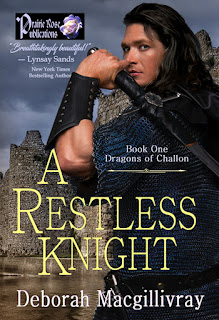
Challon’s Lady was published nine months later as A Restless Knight.

original Kensington cover

Brazilian translation cover 
 

German cover and Japanese cover


Current cover


12 February 2021

A Tale of Two Women and One Castle – The Ladies of Dunbar - Part One


A Tale of Two Women and One Castle – The Ladies of Dunbar - Part One


(Ruins of Castle Dunbar)


 I had intended this blog to be about one castle and two valiant women.  Only, these are ladies I have long admired, thus I cannot keep their roles in history brief.  With an eye to showcasing each, I will present them in two parts.  I think they have earned that.

In In my second blog on women, famous or infamous ancestors, and how history can shift the view on their roles in the past or ignore them, I will be talking about two special women and one castle.  These women, both my direct ancestors, both valiantly defended their castle, the same one—Dunbar Castle.  While a ruins today, Dunbar was one of the strongest fortresses in all of Scotland.  Situated on a prominent position overlooking the harbor town of Dunbar in East Lothian, this castle played a pivotal part in Scottish history throughout the medieval era.  The first woman held this castle in a siege against the king of England—and her own husband.  Then, nearly forty years later, another woman—countess of the same castle and daughter-in-law of the first—held out against another siege by the English for six months and won.  These acts of defiance earn one a near legend, while the other is all but forgotten by historians.

When I got my first computer, I was amazed at the access to research online.  Instead of hands on investigations of days, weeks, months of going to specific places to research documents (IF you were permitted access), suddenly, you could do the same amount of work in a matter of a few minutes.  It was a researcher’s dream come true!  No more “limited access” to vital records because of their age, no expensive traveling, and no more time drain.

One of the first projects I posted online was my research into Marjorie Comyn, Countess of Dunbar and March (my 25th great-grandmother).  Marjorie came from Scottish nobility on both sides of her family. Daughter of Alexander Comyn, 2nd earl of Buchan and Elizabeth de Quincy (daughter of Sir Roger de Quincy, earl of Winchester), Marjorie married Cospatrick Dunbar, 8th earl of Dunbar, 7th earl of March (an ancient lineage going back to the original warrior kings of the Scots).  Cospatrick carried the nickname "Blackbeard the Competitor" for he was one of thirteen men vying for the crown of the Scots in 1290, after the deaths of Alexander III and his only heir the Maid of Norway.


(Crest of Clan Comyn)

Cospatrick's strongest opposition was from Robert the Bruce (King Robert I’s grandfather), John Balliol (who eventually won by Edward Longshanks' decree) and John "the Black" Comyn, Lord of Badenoch.  All had direct lines going back to David, earl of Huntingdon, who had been prince and heir to the crown, making this basically a family dispute!  These challengers, having rather similar lineages, each claimed they held the right to rule Scotland.  In the vacuum of no clear path to crowning a monarch, King Edward declared himself “overlord” to Scotland.  The contenders yielded to him on this point, each hoping he would then back their bid to be Scotland’s new king.  Without realizing the enormity and future repercussions of the move, they made the error of going to Edward and laying their claims before his consideration, asking him to be the judge.


(Crest of Dunbar)

Edward was considered a great legal mind.  Many of the legal reforms that are still used today originated with him.  While he might have loved the legal system, he had one single focus above all: uniting the kingdoms of England, Scotland, Wales and Ireland—and France—under one crown—his.  When the Scots nobles deferred to Edward to rule who should be king of the Scots, Edward seized the opportunity to flex that power.  In the end, Edward chose John Balliol.  John Black Comyn and John Balliol were both trying to snatch the crown, but they were also close kinsmen.  Being of an incisive mind, Edward knew Black Comyn was no man to be controlled.  To further his own aims, Edward thought by choosing Balliol he could unite the majority of Scotland behind King John, after all Clan Comyn was one of the most powerful clans in the Highlands.  Balliol proved as malleable as Edward assumed, and he ended up bending knee to Edward as his overlord.  If the nobles thought this would be the end to the question of who ruled Scotland, they soon learned the English monarch had other ideas.  He used every excuse to yank on the puppet strings attached to Balliol.  Edward's excessive demands for men and money to support the upcoming war with France placed the new Scottish king in an impossible position. Balliol was left with little choice but to rebel, and to seek an agreement to a mutual defense pact with France.  Edward Longshanks' machinations and deliberate humiliations of King John would push the barons to finally say enough!  Balliol—prodded by the Comyns—found spine enough to defy Edward (likely what the king of England wanted to happen all along, thus giving him the excuse to invade Scotland).  Both Robert Bruce “the Competitor” and Cospatrick sought to curry favor with the English King, each thinking to offer themselves as a replacement for Balliol.

In this swirling toxic mix of political strife, Marjorie’s marriage only complicated matters.  Her father was Alexander Comyn, 6th earl of Buchan, both he and her brother wanted the crown for themselves.  Since the men were close kin to Balliol, they eventually backed his claim.  However, the man she married, Cospatrick earl of Dunbar and March, was also a contender, and he was not letting go of his ambition to be king so easily.  He rode at Edward’s side when the king of England came northward with his army of 10,000 infantry and 1000 heavy-horse.

Marjorie stood on the curtain wall, waving bye bye to her lord husband.  There in the spring of 1296, she was now commander of a fortress smack in the middle of the English army and the Scottish army.  Her husband was in charge of part of the English forces under Balliol’s father-in-law John de Warenne, 7th Earl of Surrey.  Her brother and uncle, and a slew of cousins, were commanders in Balliol’s army.


I suppose Cospatrick chauvinistically assumed his lady wife would abide by his decision to side with Edward Longshanks, and carry out his wishes.  He failed to consider his wife was a true Scots lass, bred to think and act on her own.  She was Marjorie Comyn, after all, not Marjorie Dunbar, in the tradition of Scottish females keeping their maiden name, instead of assuming their husband’s surname.  After the horrible sacking of Castle Berwick, where three days of killing left the town filled with thousands of dead Scots—men, women and children—word spread like wildfire throughout the Highlands. Marjorie was determined her people would not suffer a similar fate.

In Medieval times, women often were in charge of fortresses and castles while their husbands went off to war or the Crusades.  They had to deal with getting crops out, and harvesting them so their people had food enough for the winter.  They were responsible for commanding the fortress troops to keep their people safe.  They had to deal law locally, maintain the peace, and manage with taxes and more.  The portrait of the damsel in distress, waving her kerchief from the castle bastion and waiting for a valiant knight to save her, was as much a myth back then as it is now.  Women had to be capable, self-reliant, politically savvy, able to command soldiers and have a just mind to deal with day-to-day grievances of her vassals and villeins.  With that in mind, I’m not certain why Cospatrick failed to heed what his wife’s reaction would be to his presence at Edward’s side when Berwick was slaughtered—especially when she knew those same troops would soon fight her family, her clan.  Cospatrick intended she hold the castle against the Scots—her brothers, uncle and cousins—until Edward came with his army.  There they would rest and refit before the battle brewing nearby.

 April 1296 found Cospatrick in Berwick, a town littered with thousands of rotting corpses.  Edward had commanded the defeated citizens rot in place as a warning to the Scots of what happened to a town when they defied the mighty king of England.  Cospatrick was attending the council of war convened by Edward when tides came that Marjorie had handed over his castle to her brother, John Comyn of Buchan. One can imagine how Cospatrick felt.  He lived in a strange mix of fear and awe of Edward Plantagenet.  Edward’s view on women was well known. Here, Cospatrick was hoping to curry favor with the king, on the chance Edward would put the crown of Scotland on his head, to that goal, he had pledged Dunbar Castle for Edward’s forward base of operations.  The castle was vital to Edward’s plans since it lay on the road that went straight to Edinburgh.  Suddenly, the rug was yanked from beneath his feet!  His lady wife had defied him and was supporting the Scottish forces.  I am sure Cospatrick knew his chance of ever being king of the Scots died with the news of Marjorie’s defiance.  Edward was forced to change his plans and send John de Warenne, 7th Earl of Surrey, and William de Beauchamp, 9th Earl of Warwick (the latter a veteran of Edward’s campaigns in Wales) northward with the express purpose of retaking the castle. On the 25th of April, one-third of Edward’s force marched out of Berwick with a brigade of 400 heavy cavalry and 4500 infantry.

Can you imagine the embarrassment of the mighty earl of Dunbar and March?  A man who dreamt of being king of Scotland, and seeing that objective within grasp only to learn his lady wife was destroying his ambition—not only defying him, but defying his king?  Edward demanded the castle taken before the coming battle.  It didn’t happen.  Marjorie refused to yield. The troops had arrived late in the day on April 26th.  Edward Longshanks and her husband were forced to deal with being locked out.  Already undermanned due to her husband stripping the fortress of men to fight for Edward, Marjorie used her disobedience to buy time to get her people out by the sea. Edward ordered Cospatrick to retake his own castle.  He was impatient to see the deed done before they engaged the Scottish army. 


(Dunbar Castle 1296)

I suppose her brother and uncle hoped to catch the English in the midst of trying to take the castle.  On the sunny, but cold spring morn of the 27th, the Scottish host was camped near Doon Hill.  Comyn, Lord Badenoch could easily see Warenne’s army, marching on the road to Spott Village.  Dust raised by the men and horses would have signaled where the English forces were a mile away.  The Comyns were confident in their numbers, but failed to take into account they lacked heavy horse, archers, and their infantry was hardly more than farmers with pitchforks and axes.  Compared to well-seasoned warriors and shock troops in the English army, doom rode on the horizon.  The Scots didn’t stand a chance.  Comyn’s single plan of battle was a full frontal attack.  The whole battle was over in less than an hour.  Hundreds —thousands, if you believe some English historians—of Scots lay dead on the battlefield, and nearly all of Scottish nobility was taken prisoner to be sent south for trial.


(Battle of Dunbar 1296)

That left Edward to turn his attention back to Dunbar castle.  Some sources say the castle just surrendered when Edward rode up to the gates after the battle had been won.  However, his exchequer receipts hint at a different story. Edward paid for “repairs, restocking and refitting” and for the English troops to remain behind and secure the castle.  Since Edward was a pinchpenny, it is doubtful he would have paid such large sums had the fortress not been severely damage during the retaking.

There are only a few references to the storming of the castle, and even less about Marjorie’s fate.  The great Scottish author Nigel Tranter featured the Dunbars heavily in several of his novels, and even made mention of Marjorie’s defiance in his Scottish Castles: Tales and Traditions.  Still, he made no mention of her fate.  I was honored to develop a bit of email correspondence with him on the topic, just before his death.  He was just learning the internet, still puzzled by it, and said it might take time to answer my questions about Marjorie’s fate.  Sadly, he died before he could reply with his thoughts.


Through the years, I met Scottish historians who traveled in my grandfather’s circle. The “lit test” I used to weed out people, who truly knew their history from the ones that just repeated the works of others, was by posing this: “What happened to Marjorie Comyn, Countess of Dunbar and March in 1296?”. Sadly, most never tried to follow up with an answer.  One came to me at a party and said Marjorie went back north to Clan Comyn and died in 1308.  I busted that bubble.  That was Marjorie’s daughter—Margaret, also called Marjorie—who was a teen at the time.  Historians keep getting all the Cospatricks/Patricks and Marjorie/Marjorys mixed up.  Her daughter did escape and go back to Clan Comyn and lived a long life, marrying William Douglas, earl of Douglas.  Another man, a professor of Scottish History—emailed me with a photocopy of a record, retelling of her death, recorded 1286.  No.  That is incorrect.  Since Marjorie was holding the castle against her husband and his king in 1296, she could hardly have been dead 10 years earlier.  I pointed out how similar an 8 and 9 could look when done by a hand using pen and ink.  I even had one tell me she was alive and signed the Ragman Roll in August 1296.  There is only one name for Dunbar and March.  Patricio de Dunbar et Marchia.  I was never certain if he was outright lying, trying to trip me up for not knowing who was on the document, or he was just running a bluff, hoping I would defer and not call him on it.  Cospatrick did die in 1308, so I think some just ascribe the date to Marjorie, too.  I even had one tell me she died in 1358 and he had her bearing children in her late 60s.  Humm…no….lol.


(List of Names in Ragman Roll showing only Cospatrick of Dunbar and March)

It was always my contention she died either in the siege of the castle or sometime shortly thereafter.   I make reference to Marjorie’s defiance and the question of her fate in my first novel, A Restless Knight.


“What shame for Cospatrick.  He curries favor at the English’s side, thinking Edward might consider him as the next king of the Scots, whilst the Lady Marjorie commands Castle Dunbar.  She be a Comyn born and bred, daughter to Buchan.”

“Aye, she sided with her brother and father, turning the castle over to the Scots.  Battle took place.  Though outnumbered three times over, Warenne’s troops are battle-hardened horsemen, veterans from campaigns in Wales and Flanders.  They held and repulsed the Scots.  After that, the Scots crumbled.  Edward ordered Cospatrick to invest Castle Dunbar.  The castle fell...”

“And the Lady Marjorie?”

He hoped Tamlyn would not empathize too strongly with Marjorie Comyn, Lady Dunbar.  “No one knows for sure.  Some of Dunbar’s people escaped, using tunnels to the sea.  Possibly, she slipped out with them, and has returned north to the Comyn stronghold in the Highlands.”

Tamlyn shivered.  “Or she was in the castle when it was stormed?  Many mislike the Earl Dunbar.  His persecution of True Thomas be nigh well legend.  Pride wouldst not stand the disgrace of his countess handing his castle over to her kin.”


Great strides are being made since the internet to reexamine and correct bad history.  For centuries, and in the movie Braveheart, William Wallace’s father was named as Malcolm Wallace.  Just recently, they turned over Wallace’s great seal from when he was Guardian of Scotland, and lo!—was “William Wallace son of Alan Wallace”.  All these years they had it wrong!  To my excitement, in the past few years, I am finally seeing sources listing Marjorie’s death as 29th April, 1296 and at Dunbar Castle, Dunbar, East Lothian, Scotland.  The battle of Dunbar was on the 27th, two days before.  This new information fits with my long held belief that Marjorie died either defending her castle and people, or was killed afterward, and her death hushed up because it would have been a rallying cry for Clan Comyn.

She was a valiant lady who defended and saved many of her people, who did make it northward to Clan Comyn because of her.  She defied a husband and a king—and likely died for it.  Now history largely has erased her heroic effort.  She was a true brave heart!  She was forty-years-old when she died.


In Part two of The Ladies of Dunbar, I will tell you of another countess of Dunbar—daughter-in-law of Marjorie, who was just as stubborn and savvy, who once again held the castle against the English.  So until next month, I will leave you with the Dunbar motto “In Promptu”, which means “In Readiness”.  I do believe Marjorie did those words honor.